How We Hold Patients Accountable Between Visits (And Why It Works)
Most doctors hand you a plan and say "see ya next time." We stay in touch the whole time, and it changes everything.

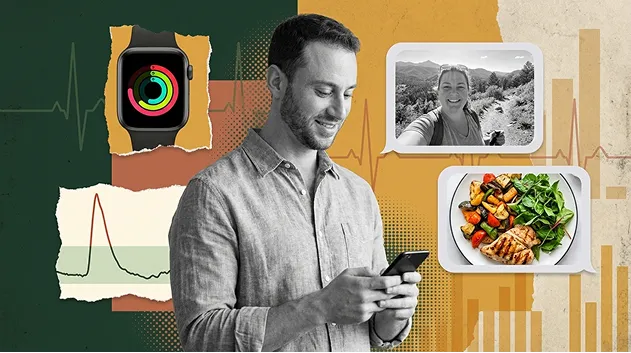
This post is about the part of patient care that happens between appointments, and why I think it matters almost more than the appointments themselves.
Most people leave their first visit knowing exactly what to do: eat better, move more, take their supplements, and fix their sleep. But what they don't realize is that about 75% of patients need someone on the other end checking in, or the whole plan falls apart within two weeks. Competing priorities take over, and by the follow-up visit, they've lost weeks of momentum.
I learned this firsthand after setting up a system where a patient sent me a photo almost every day for six months. He lost a significant amount of weight, got dramatically fitter, and told me directly that accountability was what made the habits stick, not the labs or the supplements.
In this post, I'll walk you through every accountability tool I use with patients: texts, photos, wearables, and CGM data. I'll also share how I match the right system to the right person so it actually works for the long haul.
The Difference Between Prescribing and Coaching
In conventional medicine, the standard model is straightforward: diagnose, prescribe, and follow up in a few months. For acute problems, that works fine. If you break your arm, you don't need daily check-ins; you just need a cast and time to heal.
Lifestyle medicine is a completely different story. The conditions I treat most often, like insulin resistance, chronic fatigue, weight gain, hormonal imbalances, and gut dysfunction, don't resolve just because someone wrote you a prescription. They resolve when you change how you eat, move, sleep, and manage stress. Medications can support that process, but they can't replace it.
That means the real work happens between visits, not during them. If I'm not involved in what happens between visits, I'm not coaching. I'm just dispensing.
A physician's primary role should be guiding patients toward healthier habits, not relying solely on medications to mask underlying symptoms. Active accountability shows a genuine investment in a patient's long-term outcomes. Good coaching means keeping patients motivated and constantly connected to their main drivers, whether that's reducing pain, keeping up with their grandkids, or training for an upcoming trip.
How It Actually Works
There isn't a single accountability system that works for everyone. Different patients respond to different approaches, so I match the toolkit to the individual. Here’s what that looks like in practice.
Direct Communication: Texts, Photos, and Emails
The simplest option is a daily or near-daily text. I ask patients to send me a photo of their morning walk, their meal, or their heart rate after a workout: something concrete that proves they followed through.
One patient in particular stands out. He was trying to lose a significant amount of weight after struggling for years. We set up a system where he sent me a photo almost every day (excluding weekends) for about six months. The results were incredible. He lost a ton of weight, got much fitter, and truly built the identity of someone who prioritizes health. He told me directly that continuous accountability was what made the habits stick. We've since transitioned to occasional check-ins because he doesn't need daily oversight anymore. The identity shift has already happened.
To reinforce that commitment, I occasionally send patients photos of my own workouts. It builds a sense of shared effort and shows that I'm not asking them to do anything I'm not doing myself.
Wearables and Health Apps
I sync with patients through Apple Health, Apple Watch, and Oura Ring to monitor daily trends. When someone shares their Apple Fitness data with me, I can see their activity rings, step count, and workout frequency. It creates a passive layer of accountability where they know their data is visible, even on days we don't exchange a text.
Continuous Glucose Monitoring (CGM)
For patients working on blood sugar, weight loss, or metabolic health, a CGM adds another layer of real-time feedback. I track their data through platforms like Dexcom Clarity and can see glucose patterns as they happen. If someone consistently spikes after lunch, I can reach out and ask what’s going on before their next appointment.
This is one of the most powerful accountability tools available because it provides objective daily feedback. Patients can see the data for themselves, so it isn't just me telling them to make a change: the numbers speak for themselves.
More Frequent Appointments
Some patients respond better to formal structure than informal texting. For them, I scale back the messaging and schedule more frequent visits instead. Text check-ins aren't rewarding for everyone, and about 25% of my patients fall into that category.
For this group, accountability comes through objective data: DEXA scans, smart scale readings, body fat measurements, and quarterly blood work. Seeing tangible health markers on paper gives them the push they need to stay on track. The numbers don't lie, and for many people, that's far more motivating than a text thread.
The Nuance That Makes It Work
There is a fine line between accountability and pressure. If I set the bar too high or come across as overly aggressive, patients feel discouraged the first time they miss a day, and they give up entirely. I've seen it happen.
The goal isn't perfection; it's consistency over time, with enough flexibility to miss a day without spiraling. When a patient goes quiet for a few days, I don't send a guilt trip. I send a light nudge: something that simply says, "I noticed, and I'm still here."
It's a delicate balance that requires knowing the patient. Some people thrive with daily check-ins, while others need space and respond better to weekly data reviews. The system has to fit the person, not the other way around.
What This Looks Like from the Patient's Side
If you become a patient here, accountability is built into your care right from the start. After your initial 60-minute deep dive, we don't just hand you a plan and wish you luck for three months. You can text or email me directly with questions along the way. Texting works best for quick questions, while email is great for anything more detailed.
Beyond reactive communication, we proactively set up one or more accountability layers tailored to your goals:
- Weight Loss or Metabolic Health: Expect daily or near-daily photo check-ins, CGM monitoring, and Apple Health data sharing.
- Hormones, Thyroid, or Gut Health: Expect more frequent appointments with lab reviews, paired with email or text check-ins between visits.
- General Optimization: Expect quarterly data reviews with targeted retesting, plus the option to text me whenever something comes up.
The underlying message is always the same: you aren't doing this alone, and there is someone on the other end who will notice if you fall off track.
Why I Think This Is the Most Underrated Part of Medicine
Labs, supplements, and medications all matter, but none of them work if you don't follow through. And follow-through is driven far more by accountability than motivation.
Motivation gets you started, but accountability keeps you going when motivation runs out: when the novelty wears off, life gets busy, or you simply don't feel like thinking about your health.
Most practices don't build this in because it takes time, isn't traditionally billable, and requires a physician who is willing to engage outside of scheduled appointment blocks. But without a doubt, it's the exact piece that makes everything else stick.
If you're curious whether this approach is right for you, book a free 15-minute intro call and we can talk through it.
About the Author
Based in San Diego, Dr. Erez, D.O. is a 5-star rated integrative medicine practitioner with over 5 years of experience running his own private practice and treating hundreds of patients. He is an Institute for Functional Medicine Certified Practitioner (IFMCP) and is board-certified by the American Board of Family Medicine.
A frequent medical source, he has contributed to publications including Everyday Health, Epoch Health, California Mobility, and Woman's World. Dr. Erez is most passionate about helping individuals identify the root causes of chronic disease and leverage evidence-based interventions to reach their version of optimal health.