What Olive Oil Polyphenols Can Actually Do for Your Health
Understand the compounds behind the flavor, what human research shows, and how to choose an oil without chasing a number.

Olive oil labels can make a familiar food sound like a chemistry exam. Hydroxytyrosol. Oleocanthal. Oleacein. Then comes a large number in mg/kg, followed by a claim that this bottle is better for you than every other one.
I want to make those names useful. Olive oil polyphenols are plant compounds that contribute to an oil’s character and have attracted interest for their biological effects. They are worth understanding, but a higher number is not a guarantee of better health.
Let’s look at the main compounds, what the evidence can tell us, and which details actually help when you’re choosing a bottle.
What are polyphenols in olive oil?
“Polyphenols” is the everyday umbrella term used for a range of olive oil’s phenolic compounds. They make up a small fraction of the oil. The oil itself is mostly fat, with oleic acid as its predominant fatty acid.
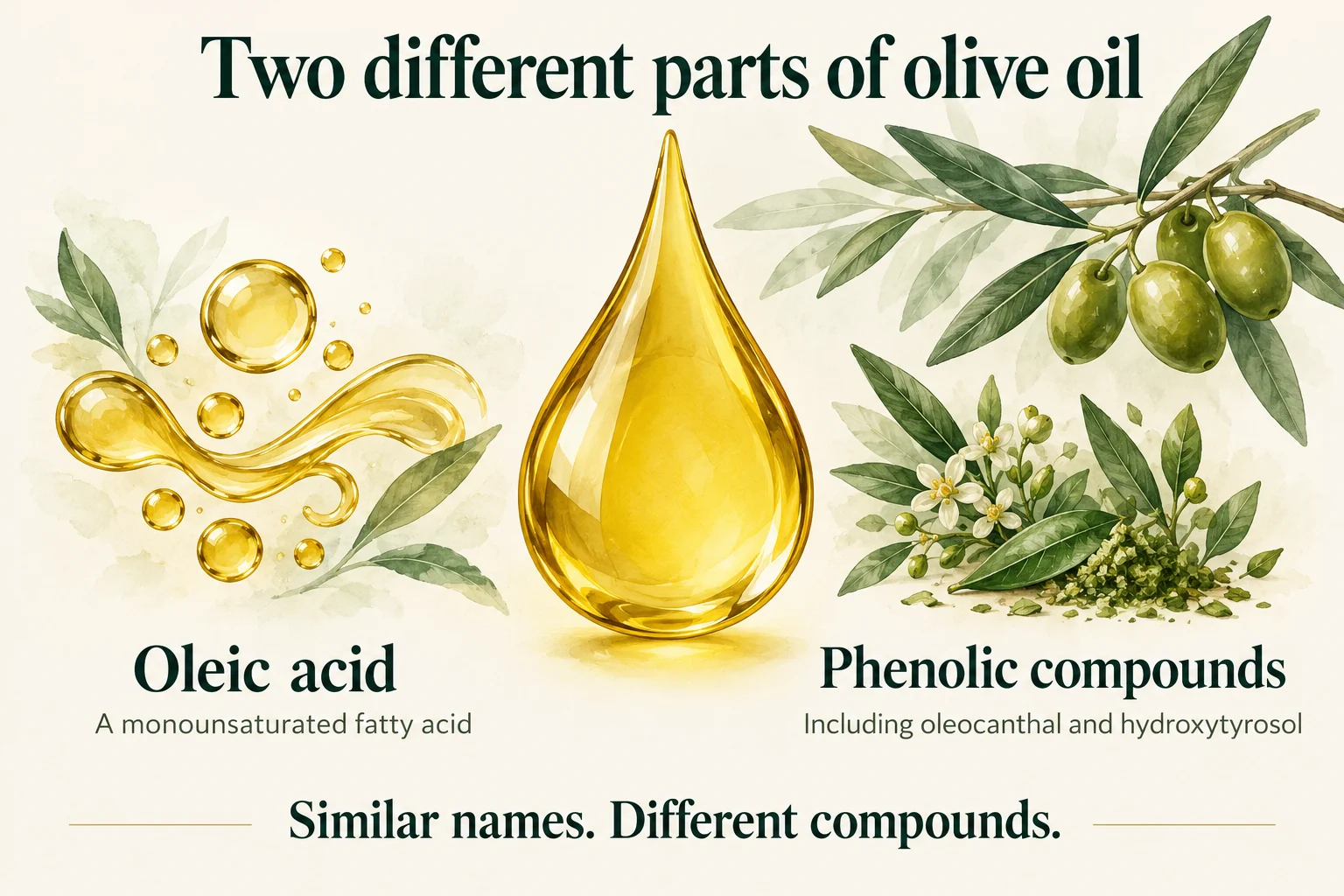
Those are two different parts of the story. Oleic acid is a monounsaturated fat; oleocanthal is a phenolic compound. Similar names do not mean they do the same job.
Extra virgin olive oil retains a range of phenolic compounds because it is obtained mechanically without refining. Its composition varies with the olives, harvest conditions, processing, and storage. You cannot infer a precise phenolic concentration from “extra virgin” alone.
For perspective, the EUROLIVE randomized trial compared otherwise similar oils with different phenolic concentrations and found differences in some lipid and oxidative-stress markers. That helps separate the phenolic fraction from the fat itself. It does not identify one compound as the answer to every health concern.
Hydroxytyrosol: a small compound with an important distinction
Hydroxytyrosol is a phenolic alcohol. You may see it listed on its own, or as part of a broader group of hydroxytyrosol-related compounds.
That distinction matters because some larger olive compounds contain a hydroxytyrosol component. “Free hydroxytyrosol,” “hydroxytyrosol after hydrolysis,” and “total polyphenols” are not interchangeable laboratory results. Hydrolysis is a process that breaks larger molecules apart for measurement.
If a report gives one of those values, read the method before comparing it with another bottle. A tiny free-hydroxytyrosol result does not necessarily mean the oil lacks related phenolic compounds.
Hydroxytyrosol also appears in the conditions for the EU’s authorized olive oil polyphenol claim. That claim addresses oxidative protection of blood lipids and has specific composition and daily-intake requirements. It is narrower than claims about preventing cancer, treating diabetes, or reversing aging.
When a brand refers to that regulation, I’d ask for evidence that its current oil meets the specified conditions. I would not translate the claim into a promise about a supplement or a disease.
Oleocanthal: the compound behind the peppery throat sensation
Oleocanthal is one reason a robust oil can catch at the back of your throat. In research on this unusual pungency, scientists identified the sensory receptor TRPA1 as part of the explanation.
You may also have heard that oleocanthal is “natural ibuprofen.” That phrase needs context. A 2005 laboratory paper by Beauchamp and colleagues showed inhibition of cyclooxygenase enzymes, which are also targets of ibuprofen.
That is a finding about biological activity. It does not establish that a tablespoon of oil treats pain like a tablet, supplies an equivalent dose, or should replace an anti-inflammatory medicine. Comparing a mechanism is not the same as demonstrating a treatment.
I find oleocanthal interesting because it helps connect flavor with chemistry. I would not use the strength of a cough to prescribe a serving, diagnose a deficiency, or decide that an oil will relieve arthritis.
Oleacein: promising research, usually as part of a mixture
Oleacein belongs to a family called secoiridoids. These olive-derived compounds are part of the phenolic profile researchers study for antioxidant and inflammatory effects.
The most useful question is what was actually tested. Was it an isolated compound in a dish, an animal experiment, a capsule, or olive oil eaten by people?
The 2023 APRIL trial compared an extra virgin oil rich in oleocanthal and oleacein with common olive oil in adults with obesity and prediabetes. Participants substituted the assigned oil in raw and cooked food for one month per intervention. Researchers reported differences in oxidative and inflammatory measures.
That is relevant human evidence, but it tested an oil containing several constituents. It cannot tell us that oleacein alone caused the findings, establish a universal dose, or show that buying the highest-oleacein bottle prevents disease.
This is how I’d read “promising”: a reason to keep studying the compound, while keeping the advice proportional to what the study measured.
Oleuropein, its derivatives, and tyrosol
Oleuropein is associated with olives and olive leaves. During olive processing, the phenolic profile changes, and olive oil contains related compounds, including oleuropein-derived forms. Reports may name an “aglycone,” meaning a form without its sugar component.
Tyrosol is another phenolic alcohol. Ligstroside-related compounds belong to its side of the chemical family. Oleocanthal and oleacein have related structures, but they are distinct compounds and should not be combined casually when interpreting a study.
The International Olive Council’s analytical methods provide a more dependable reference for what a lab measures than a marketing description such as “maximum antioxidants.”
You do not need to memorize the family tree. The practical point is that olive leaf extract, isolated hydroxytyrosol, and extra virgin olive oil are different preparations. A trial of one is not automatically evidence for the others.
If a supplement advertisement cites an olive oil study, compare the actual ingredient, amount, participants, and outcome. A shared word on two labels does not make the products equivalent.
What do human studies tell us about the benefits?
I separate the evidence into three levels:
- Mechanisms: laboratory work can show how a compound interacts with enzymes or cells. It helps researchers develop hypotheses.
- Markers in people: a clinical trial may measure cholesterol, oxidized lipids, or inflammatory markers. Those outcomes matter, but they are not identical to preventing a heart attack.
- Long-term health outcomes: larger studies may examine cardiovascular events or mortality. When they study a dietary pattern, their findings cannot be assigned to one molecule.
The PREDIMED trial belongs in that last conversation: a Mediterranean eating pattern supplemented with extra virgin olive oil or nuts reduced major cardiovascular events compared with the control intervention in a high-risk population. It was not a head-to-head test of commercial polyphenol scores.
This is why I would be cautious about ranking oils by predicted disease prevention. A lab result can support a composition claim. It cannot, on its own, tell you how much longer you’ll live or how your symptoms will change.

Does a stronger taste mean more polyphenols?
Bitterness and pepperiness can provide clues, but they cannot give you a reliable total. Different compounds contribute differently to what you taste, and foods mixed with the oil can change the sensory experience.
A study of protein and olive oil flavor found that protein could suppress bitterness and pungency. In other words, an oil can taste less intense in a meal without the meal proving that the original lab number was wrong.
My advice is to taste for enjoyment and use a suitable laboratory report for measurement. You do not have to buy an oil you dislike or drink it straight to prove that it is “working.”
Color is not a shortcut either. If you want to know a phenolic concentration, look for a report tied to the actual oil rather than treating a green hue or throat sensation as a certificate.
How to choose an oil without getting lost in the numbers
I would start with an extra virgin oil you can trace to a current harvest or batch. Then, if you are paying extra specifically for polyphenols, ask to see the current analysis.
Check the method, test date, and what the reported total includes. HPLC, quantitative NMR, and colorimetric tests do not necessarily report the same sum. Even two reports using the same broad method name may differ in preparation and calculation.For buying options, use the high-polyphenol olive oil guide, then confirm the current lot’s documentation before ordering.
A number without a method or date deserves a question, not an automatic rejection or endorsement. The seller may have useful documentation that has simply not been put on the product page.
Do storage and cooking change polyphenols?
Yes, but there is no single percentage you can subtract from every bottle each month. The starting composition and storage conditions matter. Research following different oils during storage illustrates why the original phenolic profile affects how compounds change.
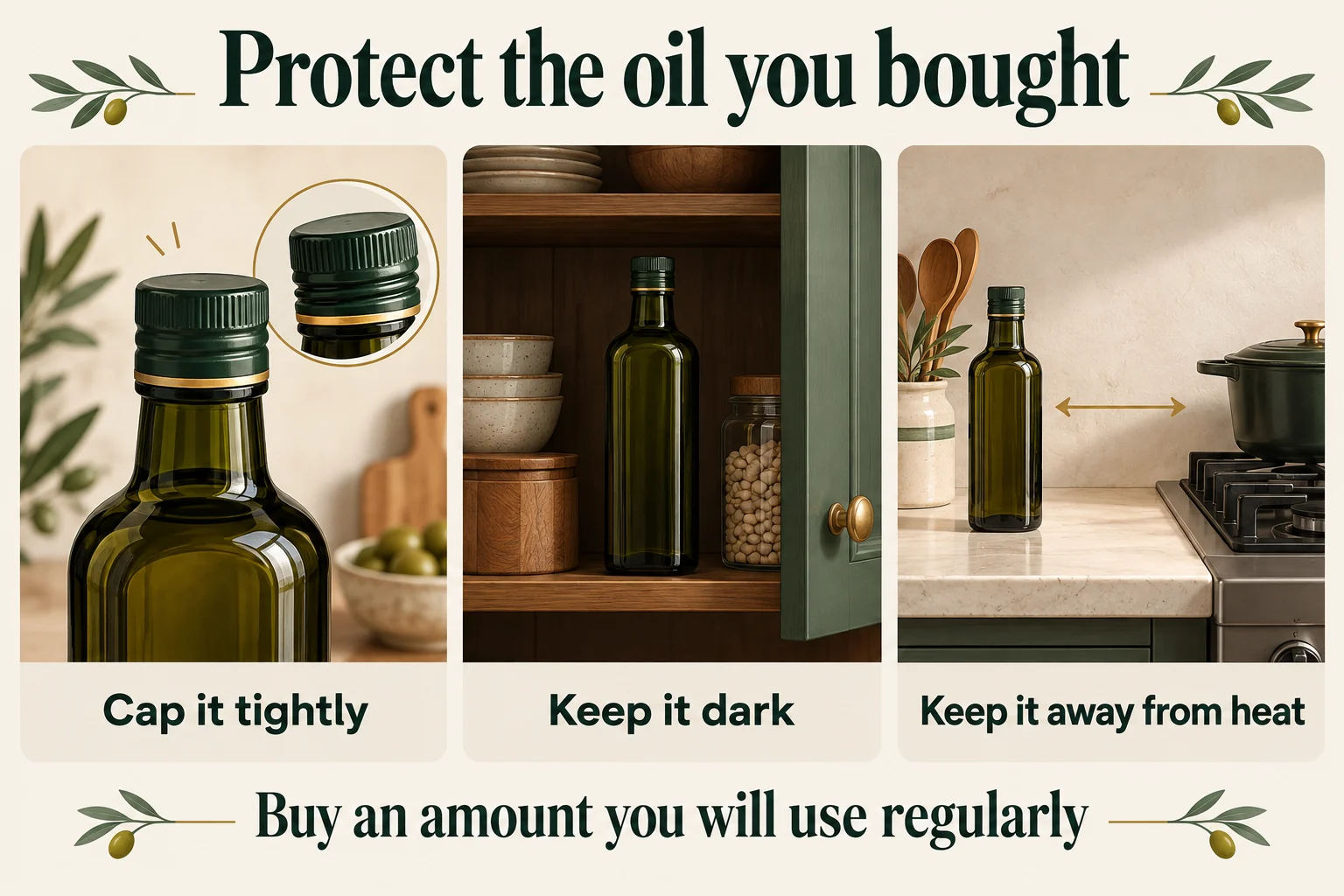
Keep your oil capped, away from the stove, and protected from light. Choose a bottle size you will use rather than keeping an expensive bottle open indefinitely. A harvest date tells you age; it does not tell you every temperature the oil encountered afterward.
Cooking also changes the profile. A study of domestic sautéing conditions found phenolic losses that depended on heating conditions. That does not mean every cooked dish loses the same amount or that cooked olive oil becomes nutritionally pointless.
If you want to enjoy the original flavor, finish a meal with some unheated oil. You can still use extra virgin olive oil in ordinary cooking. A sensible meal is more valuable than treating every phenolic molecule as something you must preserve at all costs.
Frequently asked questions
Which olive oil polyphenol is the best?
There is no established single winner for everyday health. Hydroxytyrosol-related compounds, oleocanthal, oleacein, and other phenolics have different properties and evidence. Many human trials test a mixture in an oil rather than one isolated compound. I would focus on a well-documented oil and a useful dietary habit instead of one molecule.
Is high-polyphenol olive oil the same as extra virgin?
No. Extra virgin is an olive oil grade with chemical and sensory requirements. A polyphenol result describes part of its composition. The extra virgin label does not promise one fixed phenolic concentration, and a high phenolic number alone does not establish that an oil meets all the requirements for the extra virgin grade.
Are olive oil polyphenols the same as omega-3 fats?
No. Polyphenols are phenolic plant compounds; omega-3s are fatty acids. Olive oil is predominantly a source of monounsaturated fat, especially oleic acid. I would not use a high-polyphenol label as a reason to treat olive oil as a replacement for the other foods that contribute different fats and nutrients to your diet.
Can olive oil replace a hydroxytyrosol supplement?
The two are not dose-equivalent by default. A supplement may supply a specified isolated compound, while olive oil contains a mixture with a variable concentration. Whether you need a supplement is a separate question from choosing a food. Compare the exact formulation with the relevant research rather than converting a marketing total into a treatment dose.
About the Author
Based in San Diego, Dr. Erez, D.O. is a 5-star rated integrative medicine practitioner with over 5 years of experience running his own private practice and treating hundreds of patients. He is an Institute for Functional Medicine Certified Practitioner (IFMCP) and is board-certified by the American Board of Family Medicine.
A frequent medical source, he has contributed to publications including Everyday Health, Epoch Health, California Mobility, and Woman's World. Dr. Erez is most passionate about helping individuals identify the root causes of chronic disease and leverage evidence-based interventions to reach their version of optimal health.